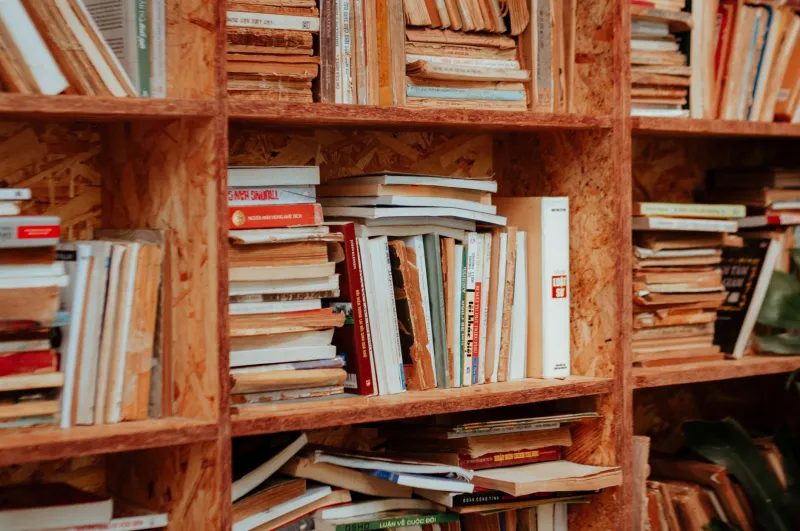
My Kid Called My DVD Shelf a Museum. I'm Taking It as a Compliment.
Photo: Tianmu peter, CC BY 3.0, via Wikimedia Commons
Last weekend my kid wandered into the den while I was reorganizing the movie shelves and stopped dead in the doorway. She looked at the wall of DVDs, the box of VHS tapes in the corner, and the lone laserdisc I've been hauling around since the Clinton administration, and she said the thing.
"Dad, this is like a museum."
She meant it as a burn. I took it as a review. Five stars.
What a Museum Actually Is
Here's the thing about museums: they keep things. That's the entire job. They hold onto objects that matter so people can go back and visit them later. My shelf does exactly that, just with fewer security guards and a lot more dust.
Because that's what a movie collection is — a promise. When I buy a film, it lives in my house. Nobody can reach into my den and take it back. Nobody can decide the license expired, the deal fell through, or the tax write-up looked better without it.
My daughter has never known that feeling. Every movie she's ever watched lives inside somebody else's server, subject to somebody else's mood. She doesn't own her favorite film. She rents it forever.
The Vanishing Act Nobody Talks About
Let's talk about the streaming shell game, because we've all played it. You go looking for a movie you love. The little thumbnail that was there in March is gone in April. Maybe it moved to a different service. Maybe it moved to no service. Maybe some corporate merger decided your favorite comedy was a rounding error on a spreadsheet.
This happens constantly, and we've all just shrugged and accepted it. Imagine if a library did that — if you walked in and half the books had been quietly burned because the publisher renegotiated a contract. There would be riots. But when a streaming service does it, we call it "content rotation" and move on.
I've had movies I paid to own digitally just... evaporate. The purchase, the receipt, the whole thing. Gone. Try pulling that with a DVD. A disc doesn't care about licensing agreements. A disc doesn't get pulled because a studio wants leverage in a negotiation. A disc plays, every time, even when the Wi-Fi doesn't.
Confessions of a Shelf Hoarder
I'll admit the collection has gotten out of hand. There are DVDs in this house I haven't touched in fifteen years. There's a VHS copy of a movie I have on three other formats. The laserdisc — a behemoth the size of a vinyl record — requires a player I'm not even sure still works.
And I'm not getting rid of any of it.
Part of that is nostalgia, sure. There's a whole afternoon of my childhood wrapped up in the ritual of it: driving to the rental store, wandering the aisles, reading the backs of boxes for movies I'd never heard of. The movie was only half the experience. The hunt was the other half.
But the bigger part is stubbornness. Every time a service yanks a title I cared about, my shelf looks a little more like insurance. A little more like the smart money.
The Algorithm Doesn't Know You
Here's what really gets me about the streaming era: it doesn't want you to have taste. It wants you to have a queue.
When you own a movie, you chose it. You picked it up, you read the box, you paid your money, and you made it part of your life. When the algorithm serves you a movie, that's a suggestion wearing a suggestion's clothes — targeted, optimized, designed to keep you watching just a little longer.
Owning something means it's yours to revisit on your schedule, not theirs. It means the movie can mean something different to you at thirty-five than it did at twenty-five, because you're the one who decided to put it back on. That's a relationship. Streaming is a vending machine.
Teach Your Kids to Own Something
So no, my daughter, this is not a museum. Museums put things behind glass. My movies come off the shelf. They get watched, argued about, quoted badly at the dinner table. They get handed down.
But if my shelf is a museum, it's the kind worth supporting — the kind that says these things mattered enough to keep. Buy the disc. Keep the tape. Build the wall.
Future you, staring at a service that just deleted your favorite movie, will send a thank-you note.