The Robot Wrote a Decent Season Two and I'm Not Okay With It
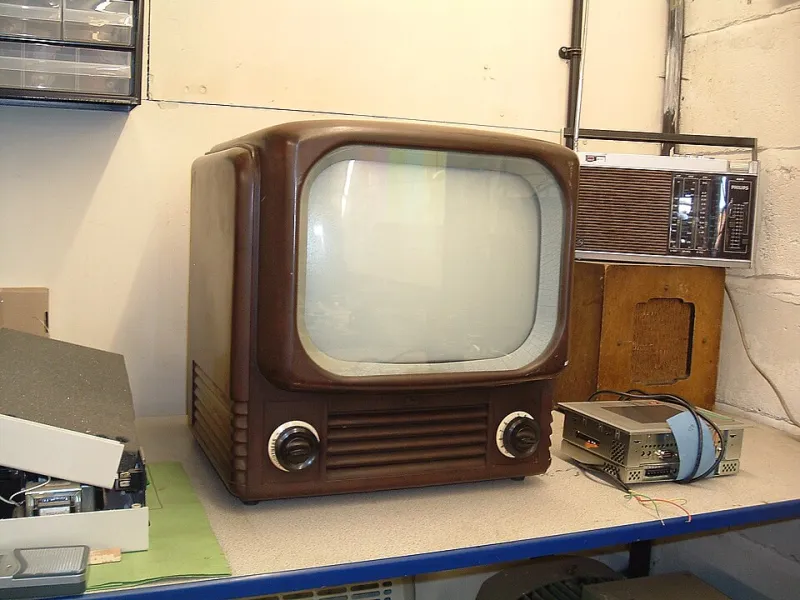
Photo: electromechanic812291, CC BY 2.0, via Wikimedia Commons
In 2026, I did something I would have mocked myself for five years ago. I asked an AI to write season two of a television show that was canceled in 2003.
The show is called 'Meridian.' It is fictional, or at least it is fictional enough that I can talk about it without a lawyer. It ran for thirteen episodes on a network that no longer exists. It was about a small coastal town, a missing sister, a lighthouse, and a local newspaper editor who kept saying 'the truth is a tide.' It ended on a cliffhanger so cruel that I have been carrying it around like a stone in my shoe for twenty-three years.
I have written my own season two. Several times. In notebooks, in Google Docs, in my head while waiting for coffee. I have daydreamed the reunion scene. I have cast and recast the sister. I have argued with myself about whether the lighthouse keeper was a ghost or just a weird guy with a boat.
So when I fed the whole show into an AI and asked for ten new episodes, I expected garbage. I expected parody. I expected a machine to tell me the truth is a tide and then give everyone a group hug.
It was not garbage. That is the problem.
The Show That Died in 2003
'Meridian' was not a hit. It was the kind of show that got one season, a small but furious fan base, and a DVD release with a comment track recorded by two actors who clearly had not spoken since the cancellation. It had a mood. Fog, cassette tapes, a diner with bad lighting, a radio station that only played sad songs.
The cliffhanger: the editor finds the sister's diary. The lighthouse keeper disappears. A boat explodes. The final shot is a page turning by itself.
We never got answers. We got a message board and a lot of bad fan fiction. Mine included.
The Experiment
My prompt was simple. I asked for a ten-episode second season that respected the characters, paid off the cliffhanger, and did not lean on nostalgia. I said: no dream sequences, no 'it was all a metaphor,' and no bringing back dead characters unless it was earned. I said: keep the fog.
The AI gave me episode titles. 'The Keeper of the Light.' 'A Paper Tide.' 'What the Radio Knew.' It gave me act breaks. It gave me a cold open where the editor finds the diary in the diner's lost-and-found. It gave me a closing montage set to a song that does not exist but felt like it should.
I read all ten episodes in one sitting. Then I sat there feeling like someone had reorganised my childhood bedroom without asking.
What the Machine Got Right
The structure was scary good. The AI understood how television works. It knew when to cut to commercial. It knew how to end an episode on a question. It knew that the editor should not solve the mystery in episode two and that the sister's return should happen in episode eight, not episode one.
It also got the dialogue rhythms. The editor still said 'the truth is a tide.' The radio DJ still spoke in half-finished sentences. The diner owner still called everyone 'sweetheart' and meant it about half the time.
And it wrote one joke that made me laugh. A real laugh. A joke I would have been proud of.
That is when I got scared.
What It Could Not Do
Here is what the AI could not do: it could not be bored.
Television writers' rooms are not machines. They are rooms full of tired people who have been staring at the same story for six months. Someone gets obsessed with a minor character. Someone else hates a plot point so much they refuse to write it. Someone tells a story about their own sister that accidentally becomes the best scene in the season. The mess is the point.
The AI did not make a mess. It made a very clean, very competent season of television. It resolved the sister's disappearance with a logical explanation. It gave the lighthouse keeper a backstory that made sense. It tied up the boat explosion in a way that was satisfying and completely forgettable.
My fan fiction was worse. My fan fiction had a musical episode. My fan fiction had a time jump. My fan fiction had a scene where two characters sat in a car for forty seconds and said nothing.
The AI could not do that scene. It wrote 'they sat in comfortable silence' and moved on. But television is silence. Television is the pause before the joke. Television is the look two actors give each other when the script has run out of words and the director is smart enough to keep rolling.
The machine imitated the shape of the show. It did not imitate the stubborn, sleep-deprived, embarrassing humanity that made the show worth caring about.
Grading Against My Own Delusions
I have to be honest. The AI's season two was better than most of my fan fiction. It was more disciplined. It was more respectful of the original. It did not include the scene where the editor adopts a dog for no reason.
But it also did not include the scene where the editor sits on the dock and cries while eating a sandwich. Because that scene does not advance the plot. It just advances the character. And the AI knew the difference.
So I give it a B-plus. It was not terrible. It was fine. And 'fine' is the scariest word in television.
The Scariest Part
I would watch it. That is the confession. If someone made this season, I would watch all ten episodes. I would complain about the ending. I would write a post about how the original would have done it better. But I would watch.
And that is what worries me. Not that a machine can write a decent season two. But that we might decide decent is enough. We might decide that the mess, the arguments, the weird obsession with the diner owner's backstory, the forty seconds of silence — all of that is inefficient.
It is not inefficient. It is the whole reason the show stayed with me for twenty-three years. A machine can write a season. It cannot leave a stone in your shoe.